


The Big Story Fall ’25
In This Issue
Women Building Winsor: Winsor’s Science Wing Comes to Life
By Story by Joan Yenawine / Illustration by Helena Pallarés / Photographs by Kelly Davidson
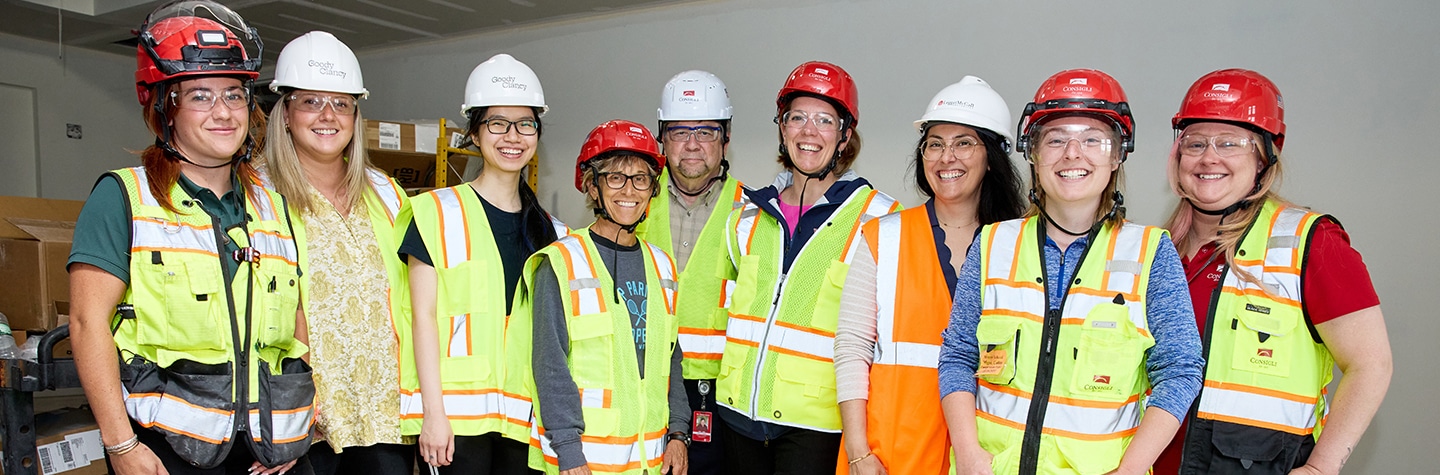
With an all-women team of project management, architecture, and construction experts at the helm, the renovation of Winsor's science wing began this spring while classes were still in session. Playing a life-sized game of Jenga where collaboration was the order of the day, school leaders, faculty, and students pulled together to ensure that this "summer slammer" project enhanced rather than disrupted stem learning at 103 Pilgrim Road.
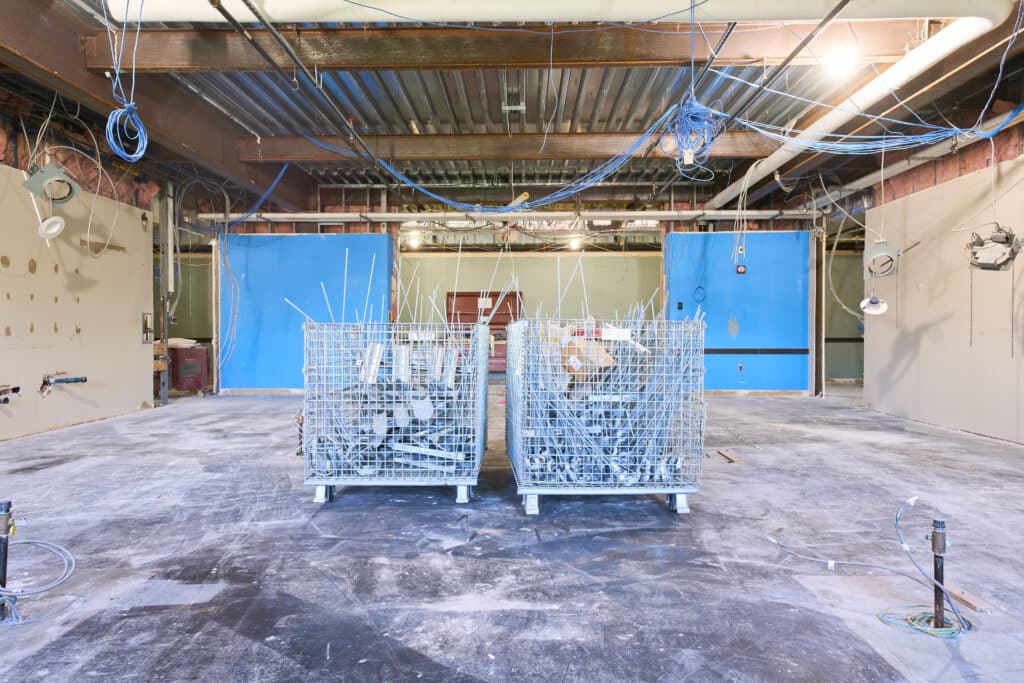
Last year, as Chief Operating Officer Karen Geromini reviewed Winsor's campus master plan, she soon saw that putting off the renovation of the third floor science wing simply wasn't an option. Built as an addition to the original building decades ago, the classrooms had outlived their intended purpose.
"In the world of science and labs, 35 years is pushing the envelope," says Director of Facilities and Construction John Crompton. "Those labs didn't owe us anything."
Making the case for the most significant campus renovation since the Lubin O'Donnell Center was built in 2015 wasn't even especially difficult. After an initial review of possible updates to the science wing and dining hall below in fall 2023, it became clear that a one-time renovation of the entire science wing was the priority and would be more cost effective than trying to address classroom issues individually. The opportunity to catch up with and even anticipate evolutions in science, technology, building codes, and accessibility standards provided all the more reason for the science wing project to take flight this spring.
Starting with the End in Mind
With approval from the board of trustees and then-Head of School Sarah Pelmas, the planning and input phase of the project kicked off. While oftentimes architects and designers lead the charge, Mr. Crompton says he prefers to start with the end user: students and faculty.
"A lot of input from the students and science faculty was really key to building a great project that will last another 35 years," says Mr. Crompton. Science Department Head Theresa Evenson recalls the excitement that these early visioning and brainstorming sessions generated.
"The big question was, 'what do you envision teaching science would be like in this space in 20 or 30 years?'" says Ms. Evenson. "Science changes, equipment changes, and technology changes. What does that mean in terms of lab spaces? What do we need to continue to grow as teachers? To [be able to] collaborate, design curriculum and have flexible teaching spaces to try new things was really important to us."
Women-Led Teams Win the Bids
As their ideas began to percolate, Winsor put the project out to bid for an expert project management company that would act as Winsor's representative, as well as an architecture firm to handle the design and a construction company to handle the build and manage all the subcontractors. As the vendors made their proposals, an interesting trend emerged: the teams with deepest benches of talent and strongest overall bids were all led by women.
"That absolutely was not a requirement," Ms. Geromini emphasizes. "But everybody presented strong female leads because I think that more women are coming into the trade business."
In these industries where women are still under-represented, the fact that a construction company or architecture firm can "stand up" an all-female team is still unusual. Perhaps what was most striking is not that the winning teams are led by women, but rather, how uniquely qualified they are.
"We looked at this from a standpoint of 'how good of a project manager are you? Not necessarily that they are female, but, 'how good of a construction superintendent are you?'" says Mr. Crompton, who was the only man in the room at the weekly team project meetings. "I think this is one of the best teams I've worked with and I've been doing this for 40 years."
Finding the Linchpin
The first order of business was to get a project management team in place. Leggat McCall Properties was chosen in part for their expertise in working within the Longwood Medical Area, whose towering, state-of-the-art buildings overlook the Winsor campus.
Vice President of Leggat McCall Properties Kate Martucci describes her role as acting as the owner's representative, helping to facilitate the evolution of the project from conceptual planning and design, all the way through to the actual execution of the construction, partnering with each of the other contractors along the way.
With 15 years of experience in the industry, she says that standing up an all-female team even five to 10 years ago would have been "unheard of. I'm still floored when I get to our owner/architect/contractor meetings and look around and it's entirely women, with the exception of John Crompton. It's incredible how far the industry has come in terms of women getting into construction, engineering, and STEM."
Her own career is a case in point. She earned her undergraduate degree in interior design, but she soon realized that it wasn't what set her heart on fire. "Design is so subjective. I didn't want to sign up for a lifetime of being criticized every day at work," she laughs.
She was, however, drawn to roles where her day was constantly changing, where challenges emerged and gave her the ability to call the shots. "If problems didn't exist, I wouldn't have a job. If it's broken, let's fix it!"
Eventually, she earned her masters in facilities management. Now she deftly weaves the combination of skills and abilities picked up from across disciplines. Because she is used to reading design drawings, she can more easily help an owner visualize what a space might look like. At the same time, she also understands the mechanics of how building systems work. All of this knowledge helps her to make the best decisions on behalf of owners as she works with architects and construction crews through fast-paced, complex projects.
Flexible, Adaptable, World-Class
At Winsor, one of her first goals was to work with the steering committee to create a project charter, a set of guiding principles that serve as a North Star for all stakeholders. "We needed to have a source of truth. It helps me as the owner's representative to understand exactly what they want from the project," says Ms. Martucci.
In essence, she says, the project charter boiled down to these main themes:
"We want to provide a world-class science space to advance teaching and learning. We want the space to be safe, accessible, and ada-compliant. We want the latest and greatest technology incorporated, but we also want the spaces to be flexible and adaptable, because programs ebb and flow."
With that mandate in place, Goody Clancy, an architecture firm that specializes in education design, began their work.
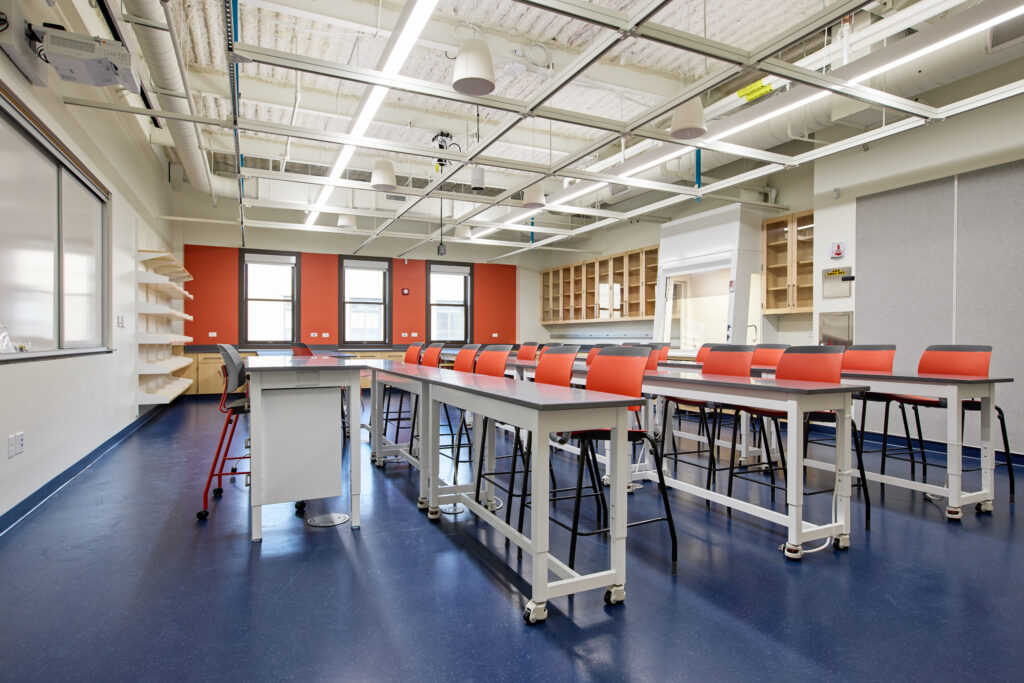
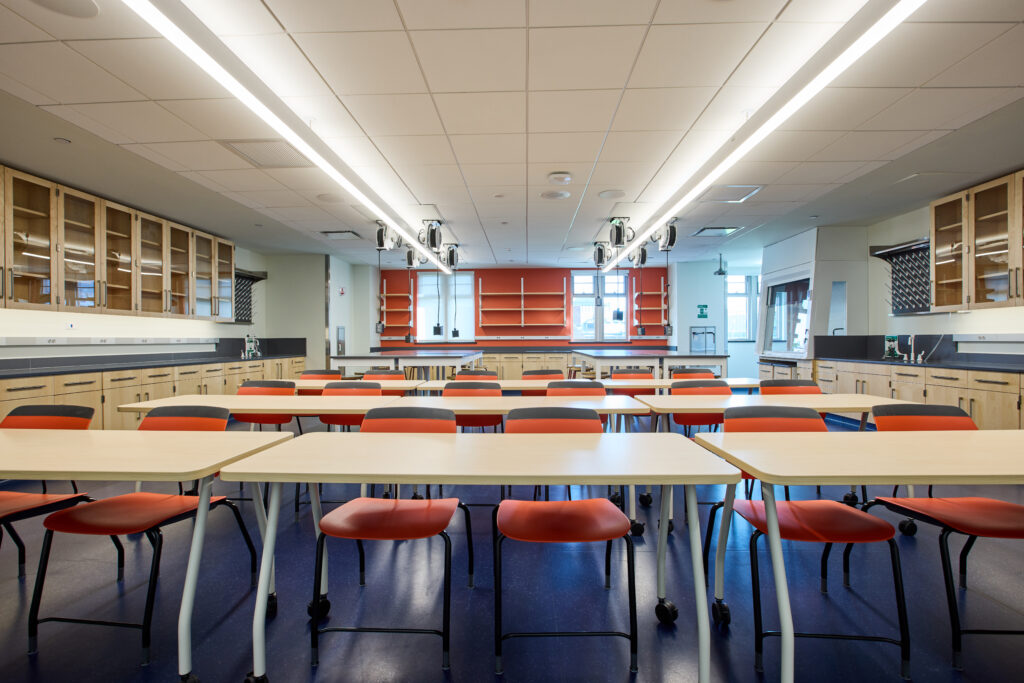
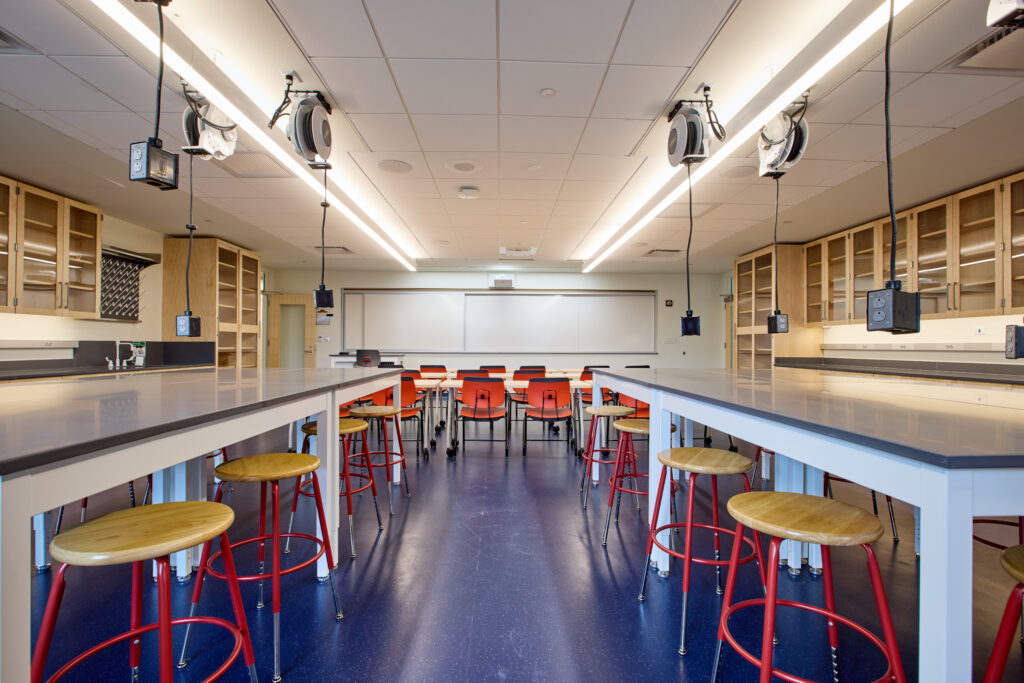
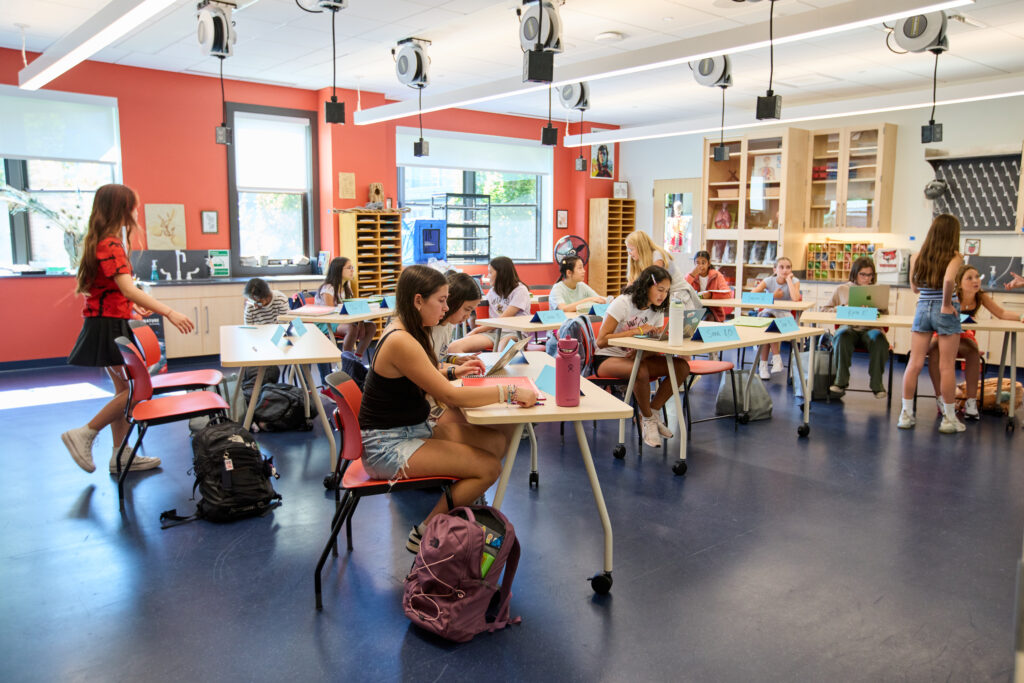
Principal/Student Life Practice leader Lisa Ferreira agrees that Winsor's science wing was beginning to show its age aesthetically, but from her perspective, the bigger issue had to do with how the space limited their teaching options. Even though the footprint of the building couldn't be expanded, she was determined to give faculty and students more flexibility within their classrooms."They had fixed benches and tablet arms, so they had students going from one side of the classroom to the other, and it was just very tight," remembers Ms. Ferreira. "The main driver was to allow instructors to teach differently and better. We swapped the positions of the chemistry and physics classrooms, and added an open-grid ceiling that can be used to suspend things, to demonstrate pendulums and forces."
Goody Clancy works primarily in higher education, and much of what is being implemented at Winsor-movable benches, services that drop down from the ceiling, and maximized flexibility-is on par with what college campuses are constructing as well.
"In some ways, I think it is the independent schools that are experimenting with pedagogy and that informs higher ed, as opposed to the other way around," says Ms. Ferreira.
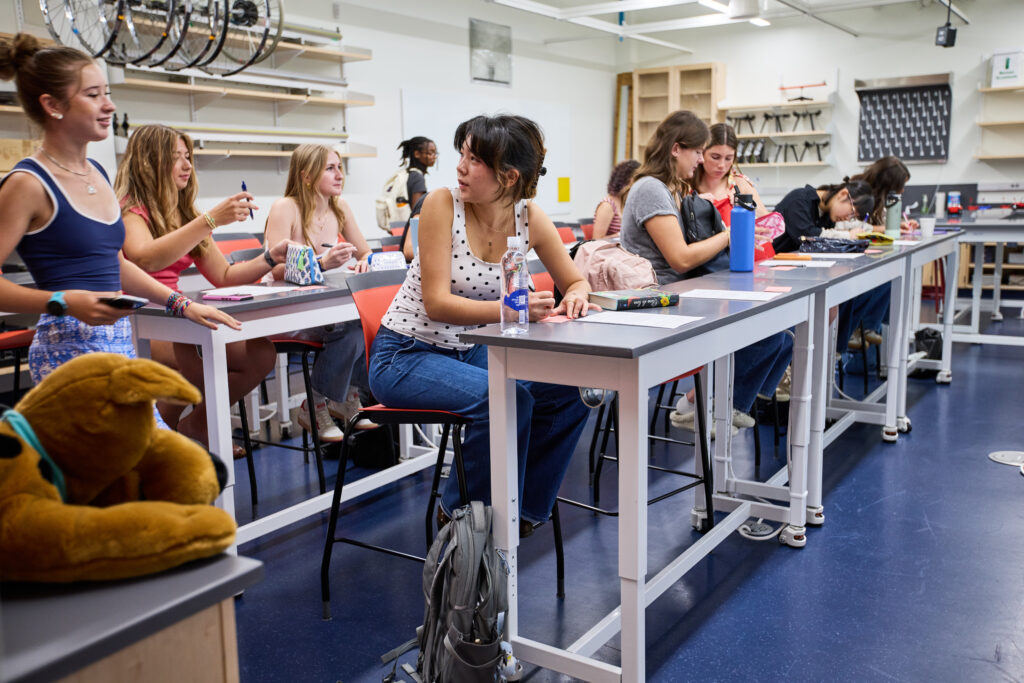
Not only will Winsor's classrooms be more physically adaptable, they will also have a brighter, more airy ambiance. "What we're hoping for is that you just feel like you can breathe more easily, that there's daylight. It's brighter, but still with some of the fun messiness that makes it a teaching and learning environment," says Ms. Ferreira.
As she worked on the project, it was the Winsor community, rather than the experience of working with an all-female-led project, that particularly stood out to her. She points out that Goody Clancy, one of the first female-led architecture firms in Boston, is already a place where women very naturally assume leadership positions.
"We celebrated at an all-school meeting and showed the students that this was an all-female-led project," she remembers. "I think that made us feel more of a team than maybe anything else, that Winsor made us part of their family in a way."
After the assembly, she was approached by a Winsor student looking for advice on pursuing architecture.
"I think she might have been in fifth grade. So brave! I'm not sure I would have done that when I was her age," she says. "But what I said to her was to just observe buildings, judge them for how they make people feel. I think for future architects, it's important to keep your eyes open to how space affects you and other people."
When a "Summer Slammer" Starts During Spring Semester
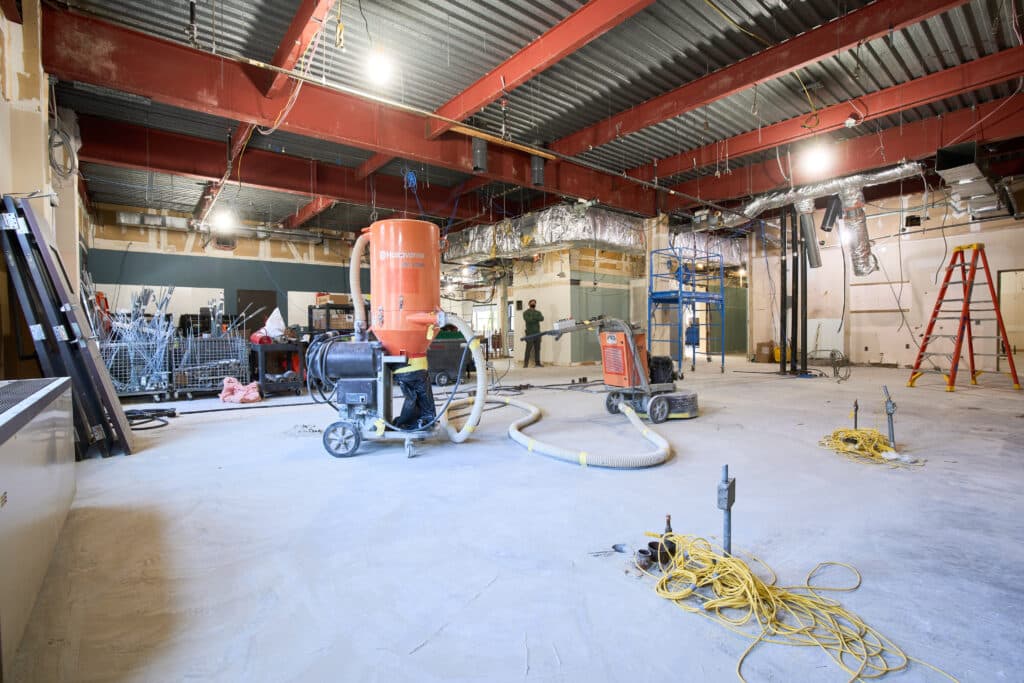
Most schools try to schedule their renovations as "summer slammers" so that all the messy, loud, complicated work takes place while students are at camp, on the beach-anywhere except on campus. Consigli earned the construction contract in part because of their vast experience with this type of project, but from the very beginning everyone knew work would need to start while school was still in session.
"Initially, the contractor was thinking it would take 20 weeks," says Mr. Crompton. "We have eight and a half [in the summer]. The solution was to start [during the school year] on second shift, and to do some Saturdays."
For the last four weeks of the spring semester, teachers packed up their classrooms and fanned out across campus, with one class even temporarily relocating next door to Temple Israel. As students left for the day at 3:00 p.m., the construction crew would come in right behind them and work until 1:00 a.m.
While the intricate planning and expertise required by all of the facilities team and the contractors was extraordinary, Ms. Geromini insists that none of that could have happened without the collaboration and cooperation of the entire Winsor community.
"To take an academic program offline for four weeks of a school year is a tremendous feat in an urban, small campus," she marvels. "The fact that the science faculty were able to sustain their teaching and student satisfaction and get these students out the door to graduation - that was really remarkable. The real accomplishment is what the students and members of the community did to make this project a success."
Leading The Construction Orchestra
Consigli Superintendent Kelley Townley describes her role on the job site as akin to the conductor in an orchestra. "We take the drawings, the time frame, the money, and I play that puzzle game out in the field. I coordinate with the different subcontractors for each trade: the electrician, the drywaller, the hvac guy, the flooring guy. It's my job to make sure that they can all move in this space efficiently, effectively, and safely. Safety is my top priority at any time for us and the school."
School is a place where Ms. Townley feels right at home, as she has spent the majority of her life either studying in one or building one. At Worcester Polytechnic Institute, she earned a Bachelor of Science in civil engineering and Bachelor of Arts in environmental and sustainable studies, and then continued on to get her master's in science innovation and technologies for global development.
All along the way, she was working, building, and earning the credibility that empowered her to form an all-female team for the Winsor project. "Credibility doesn't come with the laundry list of degrees I have," she says. "It comes with the guys trusting me and showing them that I'm prepared. Whether that's in an email or it's out in the field or it's the way you look, people have faith that you can take care of them because you're taking care of yourself and what you're doing."
In fact, taking care of people is exactly how she starts her days. Every morning, she gathers her team and they take time to physically stretch together, preparing their bodies to work safely. Then she does a walk-through of the site, looking for safety hazards and ensuring that her team has what they need, where they need it.
Structure, clarity, the ability to make decisions on the fly-these are the qualities that a good superintendent brings to the job, Ms. Townley insists, regardless of gender. Her hope is that more girls will discover, like her, that construction is "a ton of fun" and find their way into the field.
"I won't say it's all great. You always have a bad apple. But it's such a fun industry to be in….It's so rewarding to see things get built. This industry has so much room for growth. Girls can do the fun things, girls can drive the big trucks," she laughs. And she should know: she drives the biggest truck in Winsor's lot these days.
She too, was inspired by the atmosphere she experienced at Winsor and by the students and staff that she met. From the all-school assembly, to stand-up meetings with the facilities staff and other leadership, she reflects that, "Winsor has cultivated something here where even visitors know they aren't just looking for the man in the room. There's a certain level of comfort and confidence that comes from that, and that's instilled in the girls."
New Year, New Space
Throughout the spring and summer, Winsor staff and their external teams worked with the discipline and camaraderie of professionals who know that no matter what, the job has to be done to perfection before the fall semester begins.
The project wrapped up much in the same way it began, with visions of how students and faculty are going to make the most of every new possibility the revitalized space offers. In mid-August, faculty once again accessed the science wing, with just enough time to make their classrooms their own again and dream up new possibilities for their curriculum.
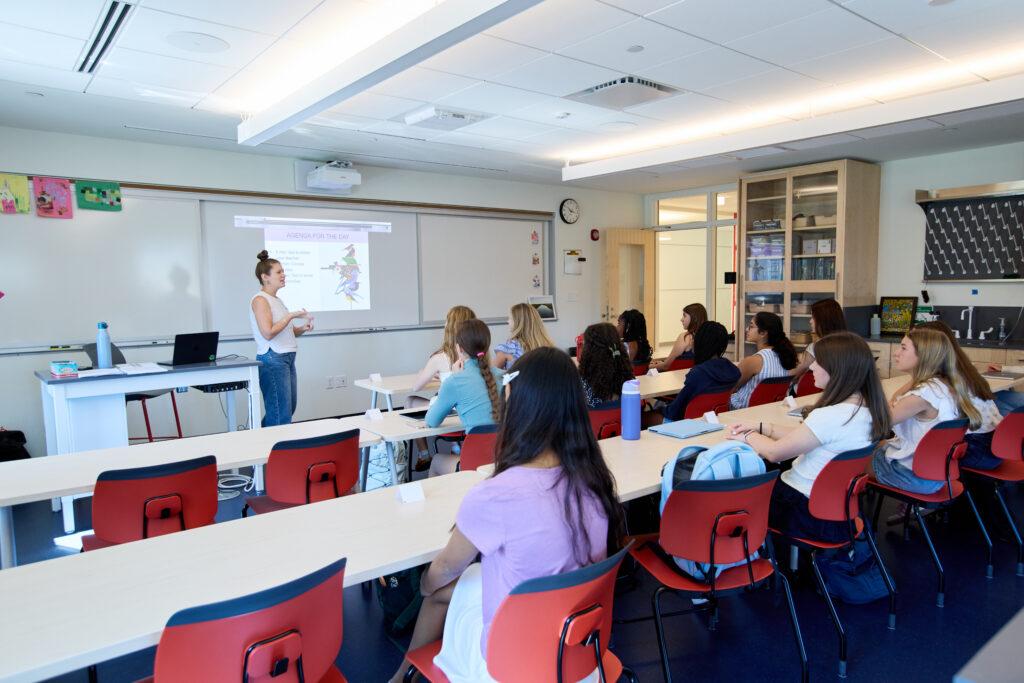
With the rest of the Winsor community now in the science wing this fall, "They're saying, 'Wow,'" says Ms. Geromini. "It's the new shiny penny on campus. It's bright, it's beautiful, it's innovative. Now that they actually sit at their desks, they are seeing the different types of instructions, labs and experiments. It's a game changer."
“We want to provide a world-class science space to advance teaching
and learning.”
Kate Martucci, Vice President, Leggat McCall Properties