


Local Author Sparks Rich Classroom Discussion
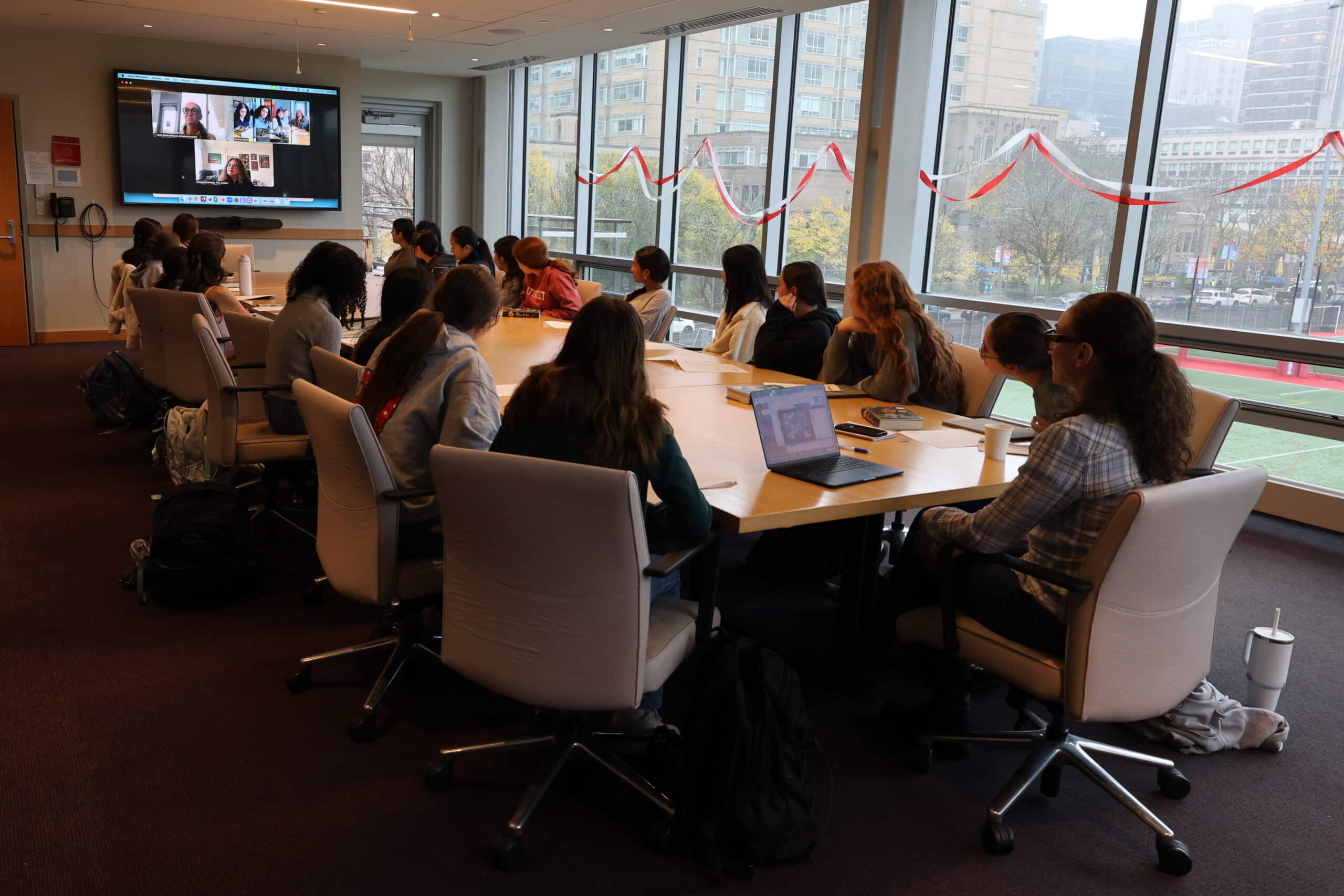
Local Puerto Rican–Bostonian author Elizabeth Santiago visited campus last week for a conversation with two sections of AP Spanish, a course for which students had spent the summer reading her debut novel Claro de Luna. The book, which explores colonial history, Taíno identity, gentrification, and the power of community, became the foundation for a wide-ranging discussion about culture, language, and storytelling.
Invited by World Languages Faculty Laura Bravo Melguizo, Ms. Santiago spoke about discovering her calling as a writer at a young age and the importance of seeing nuanced, dignified portrayals of communities that are often misunderstood. Growing up in Dorchester, Massachusetts in the 1980s and ’90s, she explained, shaped her understanding of how narratives about Black and Latino neighborhoods are often distorted.
“I wanted to show the gray,” she said. “When I was growing up, it was so black and white: you’re good or you’re bad… It was that very specific belief system. So I wanted to mix it up…so that we were looking at people in a broader way.”
Students asked thoughtful and challenging questions about character development, symbolism, and the real-world events that influenced the book. One scene, Santiago explained, was inspired by a true story of a six-year-old boy in Texas who was handcuffed and arrested at school. “At the time, my son was six,” she recalled. “I couldn’t stop thinking about what that would feel like as a parent. I kept imagining this little boy and what his mother must have felt—what his family must have felt. I would write these little stories, and that turned into the very first scene in the book that I wrote.”
Students also engaged with Santiago’s Spotify playlist of Puerto Rican music, which includes cultural touchstones like “Anacaona,” “Pa’lante,” and “Yo Soy Boricua.” AP Spanish classes presented projects this week connecting the songs with themes in the novel and with the history of Puerto Rico. Santiago encouraged them to explore the legacy of iconic figures such as Anacaona and the power of art to preserve identity.
Santiago emphasized the resilience of communities—and particularly women—who pass down culture, memory, and hope. “I have been surrounded my whole life by…women, and by elders,” she shared. “We spent a lot of time in the kitchen, and stories get passed down that way. And I …wanted to honor that.” Students left the discussion energized as readers and interpreters of language, history, and culture. Discussions like this deepen classroom conversations, giving students a tangible connection to Puerto Rican identity and to the real-world issues woven throughout Claro de Luna. It was the kind of exchange that will continue to inform their perspectives long after the unit ends.