A History of Science Education: Reflecting on Alumnae Weekend’s Archives Masterclass
By Winsor Archivist Chelsea McNeil
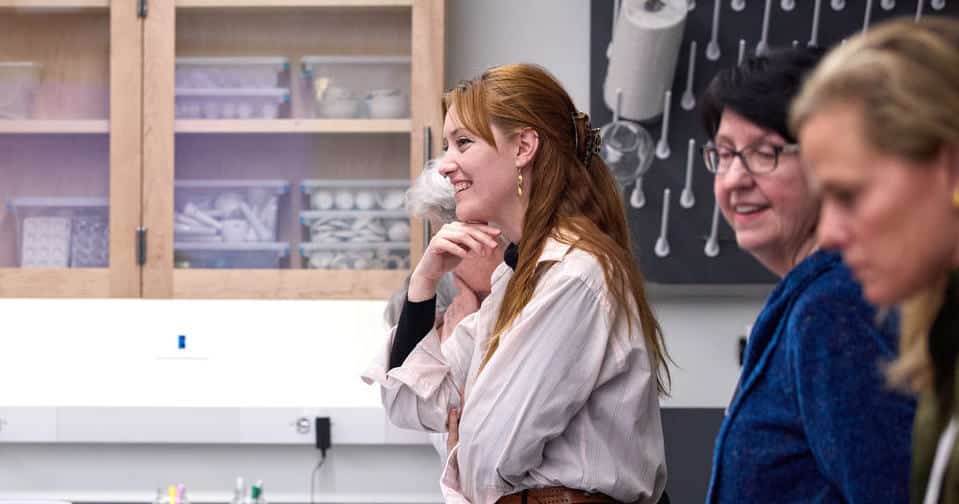
When Winsor’s Advancement team approached me with the idea of hosting a masterclass at Alumnae Weekend, I was thrilled. Even more exciting, the team suggested the class might be themed around the history of science education at Winsor. This way, we could host classes in the newly-renovated science wing in conjunction with the science faculty masterclasses. Designing archival events is always a fulfilling part of my work, but especially so when aimed at Winsor’s passionate, connected community of graduates. Eager to start, I delved into Winsor’s records and artifacts to discover all I could about Winsor’s science history.
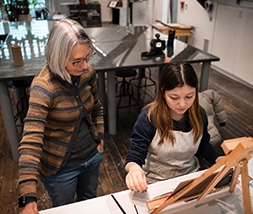
The basis of my research was formed on Winsor’s archives, secondary sources such as Diane Haley’s Generous Minded Women, and institutional memory holders such as longtime Science Faculty Denise Labiniac. From these sources, I learned a little bit about various periods of science education at Winsor. There is so much history, from Winsor’s scientific laboratory at 21 Marlborough Street in 1896, to the roaring popularity of Winsor’s robotics team (2017–). The story of science education is filled with instances of discovery and joy. With this research at hand, I designed a class to be both informative and engaging. I put together a brief slideshow, and then designed three “breakout” sessions for class participants. This consisted of 1) a pop-up exhibit, featuring science-related archival materials, 2) a photo identification station, where alums could provide information about unlabeled, science-related photos from the archives, and 3) a “mini oral history” station, where participants could share a favorite Winsor science memory.
“I found myself!” said Alison Geyer ’75, pointing at a figure in the corner of a black and white photo. Remarkably, one of the archival photos I set out for identification featured Alison and other students photographed while in a science class. I particularly enjoyed chatting with the group about the heavy, clunky Macintosh SE computer in the pop-up exhibit. The group speculated about whether they had used this 1988 model in one of Winsor’s computer labs, or a perhaps slightly later version. At the mini oral history station, I heard stories from interviewees about their science education that were funny, surprising, and interesting. Josie Bondoc DeBaere ’75 clarified that, while the first AP Science course was offered at Winsor in 1979, she remembers taking AP Biology and Chemistry tests prior to that time. The class may not have been designated AP, but students prior to 1979 certainly received college credits for passing AP tests. Sarah Flier ’96 shared in her oral history that, in Class I, she built a bicycle-powered city with her classmates in a class taught by Karen Funkenstein (taught 1986–2002). She explained, “that same year, we tapped a maple tree somewhere on the grounds… Then, we made maple syrup.”
Alumnae Weekend was a wonderful opportunity to meet some of Winsor’s alumnae community. I enjoyed my conversations with attendees at the masterclass, and I’m so grateful to those who shared their Winsor memories at the “mini oral histories” station. These recordings will be permanently retained in the Winsor Archives and open to research, so future generations can learn a bit about science education at Winsor.